
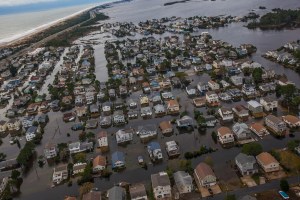
 A report from the U.S. Department of Defense Monday warns that climate change is a “threat multiplier” which can worsen national security problems such as terrorism and infectious disease spread, yet they, and the rest of us, seem positively determined to NOT actually tackle this enemy, at least not in any way that might prevent this most serious threat.
The military has long shown that it understands the realities of climate change. It has previously released reports warning of altered natural disaster response and drought, which will lead to conflicts over food and water. The Pentagon has also released an entire report on its strategy to address Arctic melting. Yet they are still focused on mitigating the impacts of climate change, while totally ignoring the subject of preventing it, which of course would require discussing the largest elephant in the global room to ever have lived: fossil fuels.
We desperately need leaders who are actually willing to lead on this issue. They are few and far between. Northern California’s freshman congressman, Jared Huffman, has emerged as one of those brave leaders, and has already been called a leading voice for the environment in Congress. During his tenure in the California legislature, he authored and passed bills to protect oceans and water quality, implement clean energy alternatives, promote green chemistry practices and reduce toxic chemical pollution.
The U.S. House of Representatives, however, has actively acted to prevent anyone from addressing environmental and energy problems. Back in May, the House passed an amendment sponsored by Rep. David McKinley (R-WV) that would have forbidden the Pentagon from using any of its funding to address the national security impacts of climate change. We need more Jareds and fewer Davids, that much is obvious. This from Climate Progress: The 20-page “2014 Climate Change Adaptation Roadmap” said the U.S. Department of Defense is “already beginning to see” some of the impacts of sea level rise, changing precipitation patterns, rising global temperatures, and increased extreme weather — four key symptoms of global warming. These symptoms have the potential to “intensify the challenges of global instability, hunger, poverty, and conflict” and will likely lead to “food and water shortages, pandemic disease, disputes over refugees and resources, and destruction by natural disasters in regions across the globe,” the report said. Because of uncertainty surrounding just how bad these problems will be in the future, the report calls for a proactive defense strategy — one which will require “thinking ahead and planning for a wide range of contingencies.”
“Climate change will affect the Department of Defense’s ability to defend the nation and poses immediate risks to U.S. national security,” the report reads. “Weather has always affected military operations, and as the climate changes, the way we execute operations may be altered or constrained.” 
 The first updated climate report in seven years, from the International Panel on Climate Change, finds that fossil-fuel created greenhouse gasses have already affected every continent with damaging climate events and changes, and will continue to do so. The report, due out Monday, and leaked to the Guardian (UK), says these effects include droughts, floods, food interruption, water interruption, ocean warming and acidification. It concludes that these risks can be lowered if ambitious action is taken to reduce the greenhouse gas emissions that cause climate change.
 There is a dance of insanity and calamity underway today. Having been criticized as alarmist seven years ago, government officials and scientists are gathered in Yokohama, Japan this week to finalize the report before the final wording is released on Monday. Nearly 500 people must sign off on the exact wording of the summary, including the 66 expert authors, 271 officials from 115 countries, and 57 observers.
 In a report released yesterday, the American Association for the Advancement of Science warns that the situation is now urgent.
 What are we going to do?
 BUCKYIDEAS