Shouldn’t our “Department of Defense” defend us against our greatest enemy?

If Buckminster Fuller were alive today, he would be reminding the U.S. Department of Defense of its primary mission: “to protect the security of our country” by reckoning with all enemies, both foreign and domestic.  Both above the ground and below the ground. After Sandy, Katrina, ferocious droughts, increasing wildfires and intolerable heat waves worldwide, it seems pretty apparent that our greatest enemy may be the vast “resources” of fossil fuels waiting underground.

Bucky would see this moment in history as the perfect time to transition our national defenses in this direction. There are already talks of serious budget cuts, since the number and size of our traditional enemies has greatly diminished since the end of the Cold War.  Yet, those with vested interest in this same vast military industrial complex obviously oppose cuts.

We know that profit is the only motivation of today’s status quo. So why not keep the money flowing their way, but redirect their efforts — Assign them to turn all that technological innovation toward securing the environment — by protecting our coastlines, capturing and storing carbon, and developing alternative energies that will allow us to keep more fossil fuels under ground, where they must stay if our future is to exist.

The International Energy Agency released its annual report today, called the World Energy Outlook. This is direct quote from the executive summary:

No more than one-third of proven reserves of fossil fuels can be consumed prior to 2050 if the world is to achieve the 2 °C goal”, the internationally recognized limit to average global warming in order to prevent catastrophic climate change.

In other words, according to the leading experts on energy and the environment, fully two-thirds of today’s reserves of fossil fuels need to still be in the ground in 2050 in order to prevent catastrophic levels of climate change. Here’s a link to the full report.

With his characteristic optimism, Bucky would say that only a subtle shift in thinking is required:  Acceptance that today’s “weapons of mass destruction” are the very oil, gas and coal reserves now safely under ground. Instead of looking at them as assets to be tapped, as the oil industry has classified them, we need to see them as enemies of life of earth that should be used as sparingly as possible. Even if we have to pay the oil industry not to drill.

I am not a scientist. But I am so troubled by the prospects for my children’s children’s future that I am now reading, every day, as much as I can on this subject, from every reliable source I can find.  I can feel Buckminster Fuller tossing and turning in his grave hoping we will wake up in time.  Hoping we will pressure our government NOW to address these issues NOW.

Bucky would say it is simply the natural evolutionary shift, to move us away from weaponry and toward “livingry”.  I say it’s time to flip the famous Franklin D. Roosevelt quote on its head:  “The only thing we have to fear is not enough fear.”
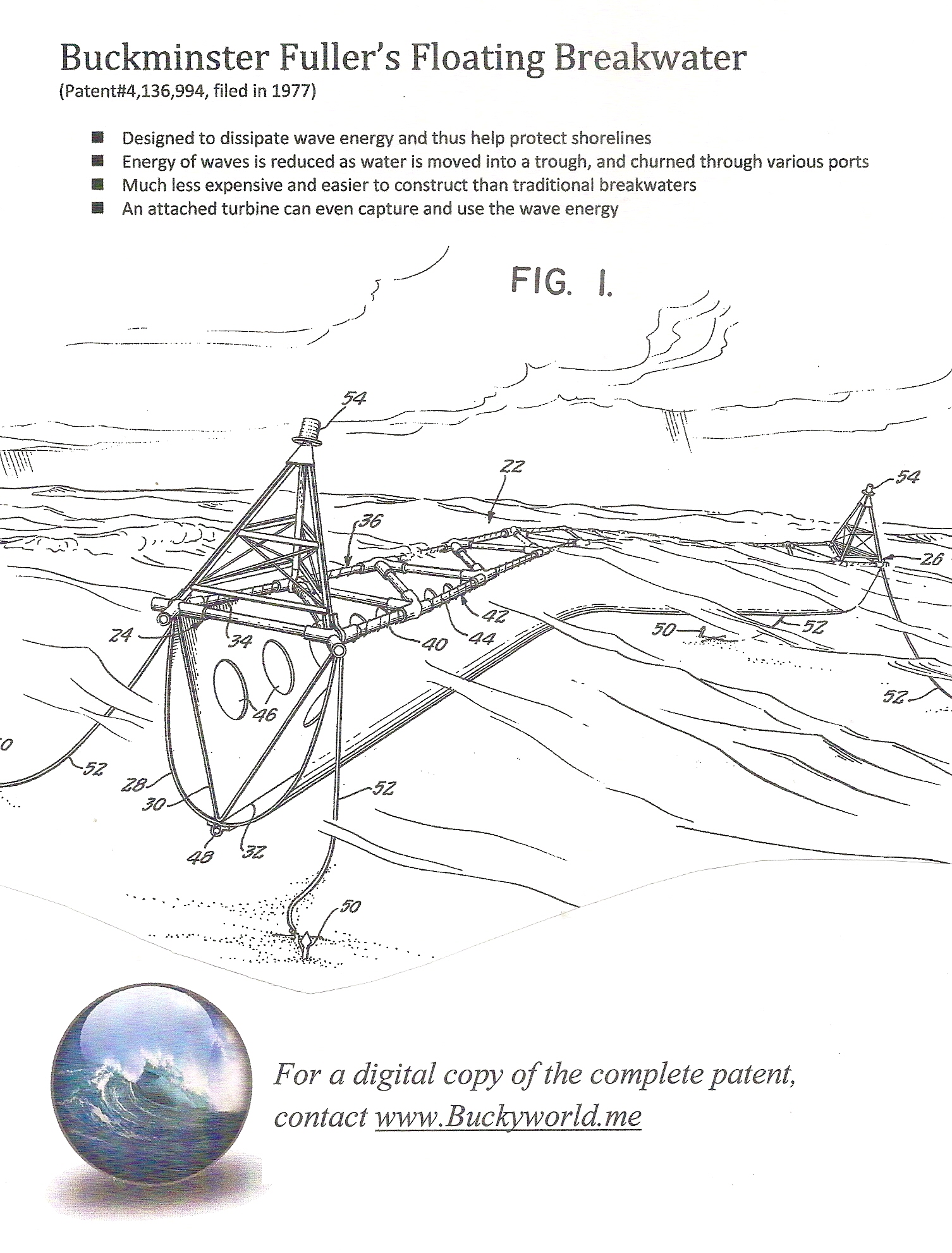
Bucky Idea: Hold back waters while making energy.

Could an idea like Buckminster Fuller’s Floating Breakwater help protect coastal communities from storm surges?  This floating breakwater is designed for where it is too expensive to build permanent concrete walls. A side benefit is that this design actually captures the wave energy, not sure how you would use that energy, but it all sure starts to make sense in this day of climate change caused by fossil fuels.

This is just one of 818 patents held by Bucky, all designed to “do more with less” making maximum use of minimum resources, and all available to the public in the Special Collections Library at Stanford University. I have not been able to determine whether a breakwater like this was ever built.  Please share any information you have about this or other inventions by Bucky  — which were overlooked during America’s climate change denial phase, which thanks to an ongoing “emergence through emergency” is finally being faced by a majority of Americans, who owe it to their fellow planetary neighbors to speak the truth to power.

Thank goodness that sad half century long era of blindly pursuing material wealth forsaking our precious biosphere, is finally almost behind us. Onward to solutions!

Climate Change should be on everybody’s plate. Because it is.

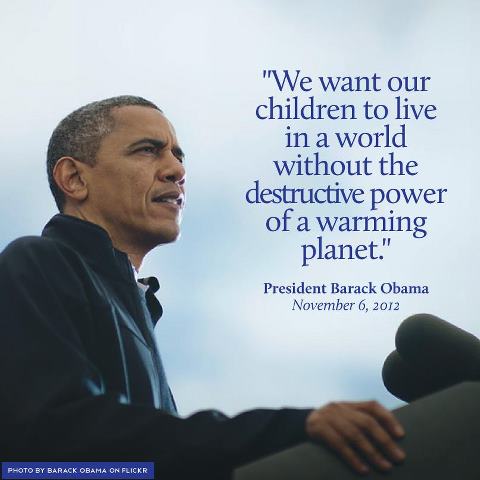
What a wonderful sentiment was expressed by President Obama as he won re-election last night.  But what can he actually do “to stop the rise of the oceans and heal planet earth”?  The truth is a great deal. But only with help from all of us.
We need a substantial leap forward in political pressure on the subject of climate change.  This should be possible now that most of us have accepted the reality that this is a real crisis, and now that most of us also believe that humanity can play a role in the outcome.  We also know that sacrifices and changes in our lifestyle are required.

Buckminster Fuller said to me in 1982 that “whether or not humanity survives its most crucial evolutionary test will be an individual decision.”  At age 25, I just didn’t get it. How could one person as powerless as me have any impact at all on universal outcomes?

Today I get it.  If each of us does our share – to make the changes we can, and to encourage leaders to face up to the challenges, then we will have a chance.

Using less fossil fuels is a good start. We could all start by driving much less. Bucky said that “by time the average person drives an hour to and from work, he has already used up much more of the planet’s resources than he could ever hope to contribute in his day’s work”.  He suggested we should all “go back to doing whatever it was we were doing before someone told us to go out and get a job.”  Now of course, not everyone can quit their job to save the planet, but why not create tax incentives for companies that let employees work from home? Or take public transportation? Or carpool? Or who hire employees that already live close to work?

There are  hundreds of ways we could be encouraging businesses to be more environmentally responsible.  Something most are simply are not doing on their own. Here in Marin County, a checker at our local Safeway who lives in Petaluma (about a hour away) has been trying for over a decade now to swap jobs with another checker who lives here in Corte Madera, but drives everyday to a Safeway in Petaluma.  They have both repeatedly been told no, because of ‘union issues’.  So instead they nonsensically cross each other’s paths everyday. Isn’t it time we gave Safeway the incentive to solve these kinds of issues?

And while we’re on the subject of food and reducing carbon emissions, we can buy more locally grown foods. Shop farmers markets. Eat less meat. My vegetarian daughter says she read (still trying to track down the source) that giving up red meat is the single most powerful thing an individual can do to help the environment.  This is not just because of the vast energy required to produce and transport meat. The methane produced by cows is also a major source of greenhouse gases.  Which reminds me of something Bucky said that scared the gasses right out of me: “If we keep burning up the planet in order to energize it, it will be like the earth is passing gas and the sun is our match. Poof.”

Facing this danger effectively will also require that we speak up to local, state and federal government leaders, and demand the big stuff — important new policies and laws.  Here are just a couple of things that are on the table right now:

Demand continuation of subsidies for Wind Power development. At the end of 2012, a federal tax credit for wind power will expire. This is already creating layoffs in the wind industry. President Obama says he would like to extend the credit, but it will depend on Congress, and the House is still controlled by too many politicians who are not willing to jeopardize their financial contributions from big oil.  Speak up on this, especially if your congressman or woman is a Republican. Surely we can get a few of them to realize that their political futures depend on them making sense for the rest of us.  If we can even bring a few of them into reality on this issue, maybe we can start making some good things happen.

Solar and other renewables. Solar panel prices are coming down. New hydropower dams, geothermal plants and wind turbines are sprouting up across the world.  Renewable power has been growing at a 27 percent annual rate according to the Center for Climate and Energy Solution www.c2ec.org — and if it continues that pace, renewables could replace enough fossil fuels to slow down carbon emissions enough to make a difference.

A recent analysis by Resources for the Future found that the United States is on pace to cut carbon emissions 16.3 percent by 2020. That would be good news, being roughly in line with what President Obama promised in international climate negotiations.

The National Resources Defense Council www.nrdcactionfund.org has the objective of “mobilizing American for a sustainable future”.  We’ll be watching to see what they actually accomplish, in terms of getting everyday citizens to get involved, and in their dealings with President Obama, especially now that he does not have a future election to worry about.

Another great resource is www.foodandwaterwatch.org  The work of this organization makes it clear that climate change is a real issue for a real people. Storms, floods, droughts, heatwaves, warmer oceans and other climate changes are a clear and obvious threat to the availability of clean water and edible food.

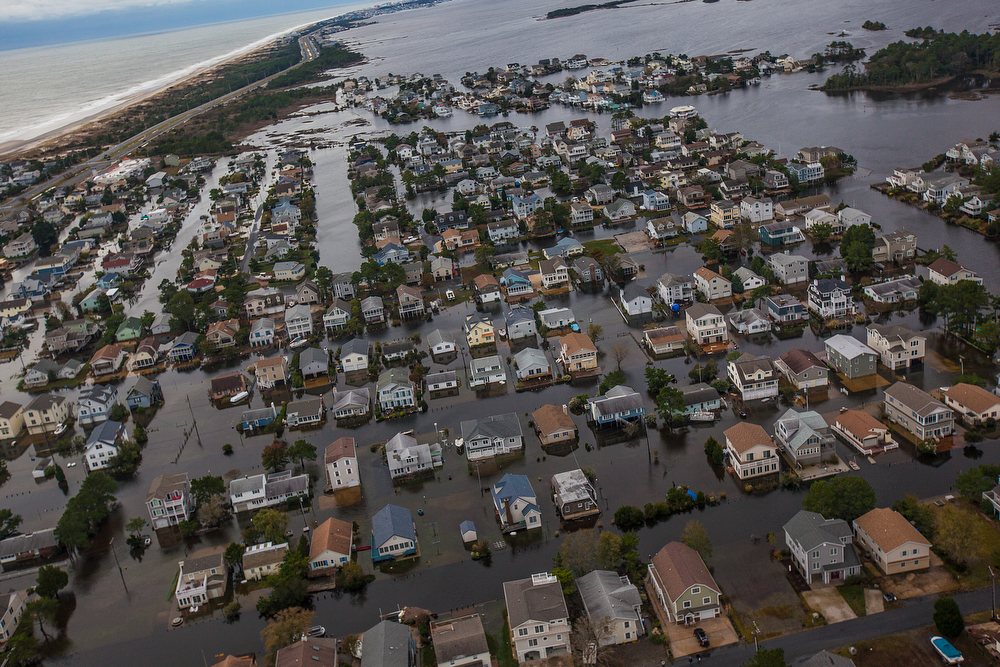
Last week super storm Sandy got our attention.  Yesterday, we smartly elected a president and in many new congressional representatives who are ready to face this issue. Next, we all need to speak up and keep up the pressure in order to get real action toward meaningful solutions.

This issue should now be on everybody’s plate. Because it is, now, on everybody’s plate.

Silver lining of hurricane Sandy is awareness of climate change

In life after Sandy, it seems everyone from Michael Bloomberg and Andrew Cuomo to Chris Hayes and NJ Governor Christie are talking about climate change, and wondering if there might actually be some meaningful solutions.  It’s an exciting time for those of us who have been waiting for decades for the world to change.

The late Buckminster Fuller (1895-1983) started waiting in the middle of the last century. He urgently called for a “design science revolution” that would help free the planet from the grip of fossil fuels, and would provide sufficient “livingry, rather than weaponry” for all human beings on earth.

Bucky (the name he preferred) said that nature’s rules must be adhered to by humankind,  if we were to survive and thrive as a species. He wrote that because of environmental issues, humanity was approaching its “critical test” as a species, in which it would be determined “whether or not man was a mistake of nature, or its greatest accomplishment.”

This subject is covered extensively in both “Critical Path” and “Uptopia or Oblivion”: From the introduction by Jaime Snyder, Fuller’s grandson: “A comprehensive global crisis is now clearly dawning in humanity’s collective awareness, interweaving dramatic climate change and massive environmental destruction as we hover closer to “points of no return” — not to mention the ongoing hazard of nuclear weaponry, and persistent large-scale extreme poverty. It has become harder and harder to avoid the recognition that we are in a full-scale planetary emergency. . . it can be very difficult to move out of denial about our predicament, without the cognition that there is a future scenario where we can turn this emergency into an emergence of sustainability for all life on earth.”

And thus Buckminster Fuller called for an anticipatory Design Science Revolution. “Fuller held that modern science was too encumbered by rigid ideas to solve the world’s great problems, and that the governing principles of nature — which even the layman could intuit and harness — would yield the essential creative solutions.” This is from Fuller’s (self-proclaimed) seminal posthumously published work entitled “Cosmography: A Posthumous Scenario for the Future of Humanity” with Adjuvant Kiyoshi Kuromiya. This contains Bucky’s geometry lessons for understanding the functioning of the universe, which he said would lead to the knowledge necessary to manifest results that would allow all humanity to thrive. Fuller said that by simply shifting focus “from weaponry to livingry” all of humanity could thrive. Fuller first called for this revolution in 1965. It was to be a ten-year turn about. We are nearly fifty years late.

In the recent SFMOMA Show “Utopian Impulse” Fuller states that he believes in humanity’s chances of accomplishing this necessary revolution, and he explains that a Utopian type of impulse is a necessary component of human evolution; that “humanity must embrace the best of itself, living lives of conscious evolution.”

Bucky wrote at length about energy, and “the need to stop burning up the planet in order to energize it”. He worried that fossil fuels could rob humanity of its future by poisoning the environment, but that deeply entrenched economic powers would make the transference to alternative sources of energy difficult. In Critical Path, Fuller explains the absurdity of having the same interests that are heavily vested in opposing such developments also in charge of making them happen.

Buckminster Fuller’s Design Science Revolution was about gaining the maximum value from the minimum resources. He coined the term “synergy” to explain how design science could create rich returns, such as how “energy income” could be harvested from the environment.

From Cosmography: “The Dark Ages still reign over all humanity, and the depth and persistence of this domination are only now becoming clear. This prison has no steel bards, chains, or locks. Instead, it is locked by misorientation and built of misinformation. We are powerfully imprisoned … by the terms in which we have been conditioned to think.”

Hurricane Sandy, while being a truly devastating event for all those involved, may also be a important catalyst to break us out of our prison of denial. We can only hope.